



Russell has serviced the project management initiatives of HJAIA, the world’s busiest airport, under its $6-billion capital improvement and $11-billion ATLNext development programs, respectively, for the last several years. Including Russell, the South De-icing Project was a collaboration of the Hartsfield-Jackson Atlanta International Airport ATLNext team, Department of Aviation, Airport Operations along with Archer Western/Lewis Contracting.
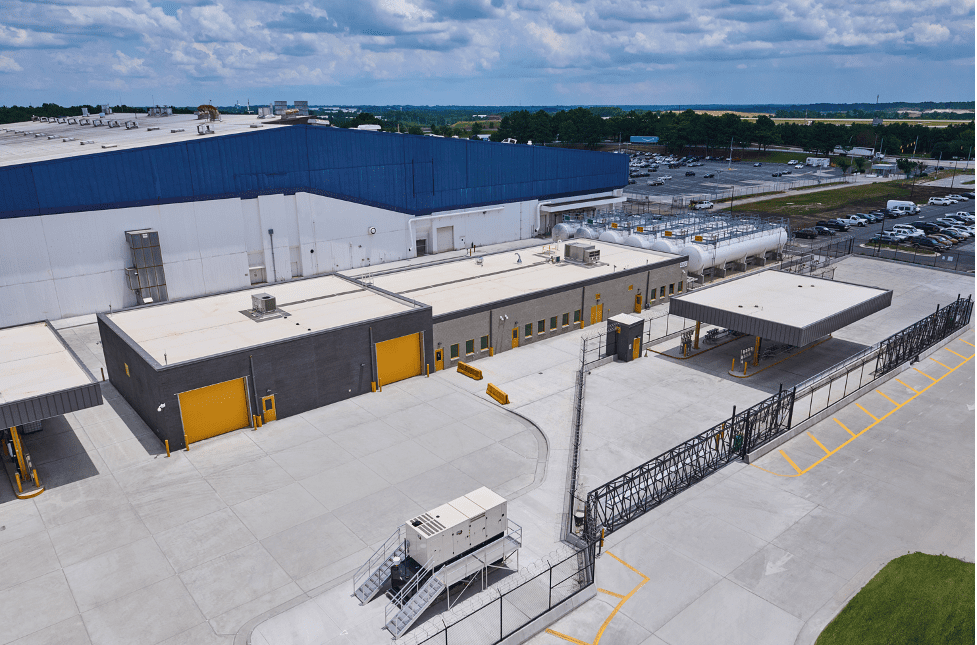
This awarded success is unprecedented and speaks volumes to the service delivery, standards, and values of the Russell Way. Valued at $147M, this South De-icing Complex is potentially the largest facility of its kind in the United States. This project was created to provide a new de-icing facility on the south side of the airfield and capable of accommodating a variety of aircraft sizes and quantities. Some of the dynamic features include: 14,000-square-foot operations building, five bays for fueling de-icing trucks with glycol, two truck maintenance bays and roughly 200,000 square yards of airfield pavement. This is also a 43-acre de-icing ramp with three new access points for the cargo facility. The building services 10 Group III and five Group V airplanes or a mixture of both. The designs were solidified in December 2019 and construction was initiated in 2021.
“Even though it does not snow a whole lot in Atlanta, whenever it does snow and full-on deicing is required, it is always very challenging because we previously did not have enough deicing pads to accommodate the demand,” said Tom Nissalke, HJAIA Assistant General Manager/Planning and Development. “This new facility will provide adequate resources for our airline partners to conduct deicing operations, and make sure the national airspace is not impacted when severe weather hits Atlanta.”
In addition, HJAIA General Manager Balram “B” Bheodari shared, “This award is one more validation of the work we’re doing in our capital improvement program. The South Deicing Project will continue to ensure ATL maintains and expands its efficiency, even in the face of extreme winter weather.”